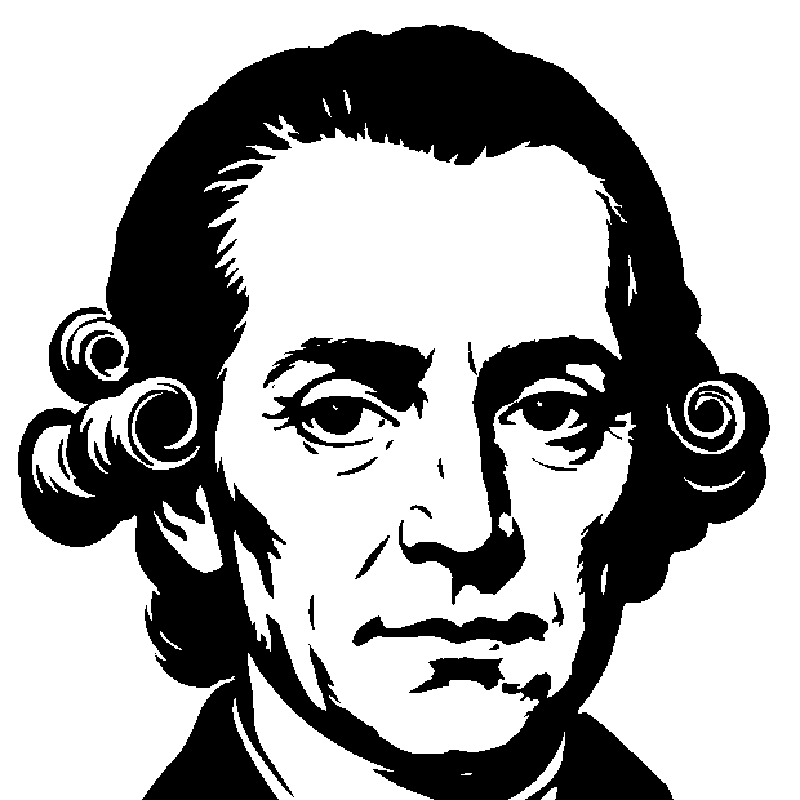
Kant
10 multiple-choice questions; 8 correct unlocks this philosopher’s avatar. This attempt was redeemed for 30 points and is non-refundable if you quit midway.
Kant said the revolution he brought to philosophy was like that of which astronomer — the one who reversed the relation between observer and heavenly bodies, so that objects conform to the structure of our cognition rather than knowledge conforming to objects?
The central question of Kant's philosophy is: how are judgments of which kind “possible”? Such judgments extend our knowledge, yet are prior to all experience.
Kant distinguishes “phenomena” from “things-in-themselves”: all our knowledge reaches only phenomena. For us, the thing-in-itself is…?
Kant distinguishes two kinds of imperatives: “If you want to be trusted, you must not lie” — a command conditioned on achieving some purpose is called…?
Kant said we must always treat humanity at the same time as an end, never merely as a means. Here, a person should be treated as…?
“Have the courage to use your own reason!” Kant used this slogan to define the movement by which people emerge from their self-imposed immaturity. What is it?
“Thoughts without content are empty, intuitions without concepts are blind.” Kant believed cognition arises from the combination of sensible intuition with what?
When reason asks questions beyond all possible experience, like “does the world have a beginning?”, it falls into a predicament where both thesis and antithesis can be “proved”. Kant calls this…?
Kant believed the moral worth of an action lies in the will giving law to itself and acting from the law. This is the will's…?
The twelve “categories” Kant lists (such as causality and substance) are a priori concepts belonging to which faculty of cognition?